
Each year, news outlets, researchers, and governments discuss the latest press freedom rankings, and the placement of a country on a list can shape how its media environment is perceived abroad. A ranking, however, is only a summary. Behind every published position sits a method that defines what press freedom means, decides which questions to ask, assigns weights to different factors, and reviews the results before publication.
This guide explains how the major global rankings are constructed, what their scores represent, and how to read them with care. The goal is to make the process understandable, not to argue for any particular outcome.
Table of Contents
- Defining Press Freedom for Measurement
- The Major Global Indexes
- The Five Indicators in the RSF Index
- Scores, Score Bands, and Map Colours
- The Abuse Tally and the Safety Indicator
- Expert Questionnaires and Review Processes
- Reading Rankings Carefully
- A Closing Perspective on the Numbers
Defining Press Freedom for Measurement
Before any country can be scored, the index producer must decide what it is measuring. Reporters Without Borders (RSF) defines press freedom as the ability of journalists, as individuals and collectives, to select, produce, and disseminate news in the public interest, independent of political, economic, legal, and social interference, and without threats to their physical and mental safety. The full explanation appears in RSF’s published methodology for the 2026 index, which is a useful starting point for anyone who wants the original wording.
This definition matters because it sets the boundaries of the ranking. A measure that focuses only on formal laws will capture different things than one that also considers economic pressure, harassment, or the practical ability to protect sources.
The Major Global Indexes
Several organisations publish comparative assessments of media environments. Two of the most widely referenced are the RSF World Press Freedom Index, which covers 180 countries and territories, and the press freedom component of Freedom House’s assessments. Although they share a common goal of comparing conditions across borders, they differ in scope, scoring, and structure.
Freedom House’s approach relies on a set of questions scored on a points scale. For its press freedom indicator, a country receives between 0 and 4 points. The core question asks whether there are free and independent media, and it breaks that question into several areas, including:
- whether the media are directly or indirectly censored;
- whether self-censorship is common among journalists, including bloggers and citizen journalists;
- whether journalists face pressure or surveillance aimed at identifying their sources;
- whether libel, security, or other restrictive laws are used against journalists who scrutinise officials.
Freedom House’s methodology notes on media freedom explain how these questions are applied and how analysts reach their scores.

The Five Indicators in the RSF Index
The RSF index organises its evaluation around five contextual indicators. Each produces a subsidiary score from 0 to 100, and all five contribute equally to the global score. Within each indicator, the questions and subquestions carry equal weight. The indicators are:
- Political context: independence from political pressure and the degree of support for media scrutiny of government, covered by 35 questions and subquestions.
- Legal framework: freedom to work without censorship or excessive legal restriction, access to information, and protection of sources, covered by 26 questions and subquestions.
- Economic context: economic constraints linked to government policy, non-state actors such as advertisers, and media owners’ business interests, covered by 26 questions and subquestions.
- Sociocultural context: social pressures tied to issues such as gender, class, ethnicity, and religion, along with cultural constraints on coverage, covered by 22 questions and subquestions.
- Safety: the ability to work without unnecessary risk of bodily harm, psychological distress, or professional harm.
The safety indicator is structured differently from the others. Two-thirds of its score comes from questions about journalists’ safety, and one-third comes from a quantitative abuses score, discussed further below.
Scores, Score Bands, and Map Colours
RSF assigns each country a score from 0 to 100, where 100 represents the highest possible level of press freedom and 0 the lowest. The score is built from two components: a quantitative tally of abuses against media and journalists, and a qualitative analysis based on responses from press freedom specialists. To make results easier to read, RSF groups scores into bands and assigns each band a colour on its press freedom map.
Because the bands are ranges, two countries in the same band may have quite different scores. Looking at the numeric score alongside the band gives a more precise picture than the band label alone.
The Abuse Tally and the Safety Indicator
The quantitative part of the RSF method is an abuses score, which accounts for one-third of the safety indicator. RSF records incidents against media and journalists connected to their work, then weights each category by severity. According to RSF’s methodology, the most serious categories carry the highest coefficients. Murder, for example, carries a coefficient of 100, while abduction and enforced disappearance carry 50 each. Detention is weighted on a sliding scale from 25 for less than one year to 50 for more than ten years. Media outlets that are ransacked, destroyed, closed, or suspended carry a coefficient of 1.
The weighted total is also adjusted for population size using a logarithmic function. RSF states that when no abuses are recorded in a country in a given year, the abuses score is 100, and the score declines as recorded abuses increase. The population figures used are generally those published by the World Bank, with a small number of specified exceptions.
Expert Questionnaires and Review Processes
Numbers alone cannot capture the full context of a media environment, so both major indexes rely on expert judgement. RSF sends its questionnaire to press freedom specialists, including journalists, researchers, academics, and human rights defenders. The questionnaire is available in 25 languages, which helps broaden the range of respondents. RSF also describes the index as a snapshot of the calendar year before publication, with data updated when major events, such as a coup or a new war, occur close to publication.
Freedom House uses a different workflow. Its analysts draw on news reports, academic analysis, non-governmental organisation reports, and on-the-ground research. Proposed scores are discussed at regional review meetings attended by staff and a panel of expert advisers. According to Freedom House’s published methodology, a score is typically changed only when a real-world development warrants it, although gradual changes are occasionally recorded in the absence of a single event. The organisation notes that some subjectivity is unavoidable, and its process aims to emphasise consistency and balance.
Reading Rankings Carefully
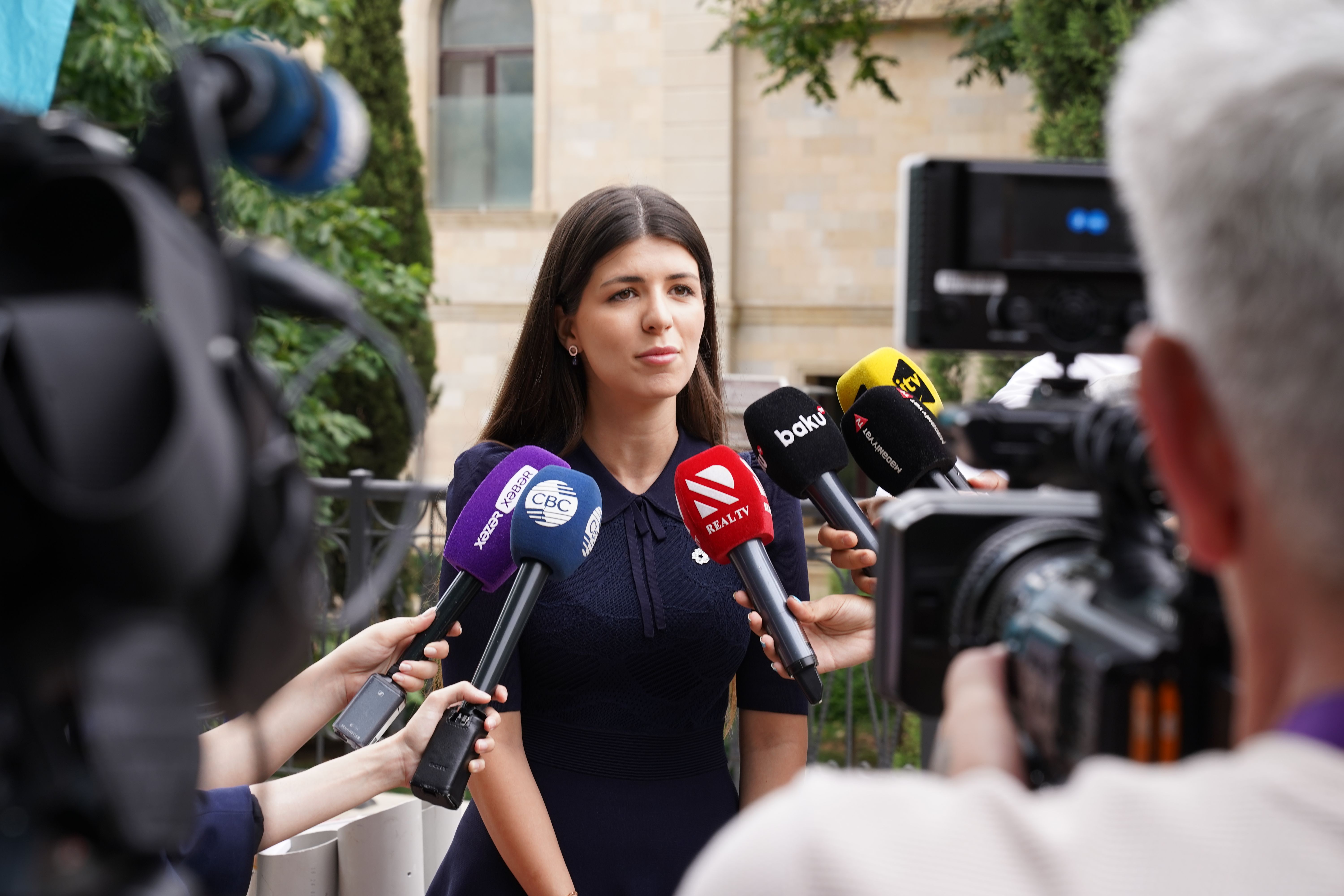
Understanding how a ranking is built makes it easier to interpret it responsibly. Official statements and media commentary often respond to new results, and spokespeople sometimes explain their position in interviews, which can add useful context to the debate.
When reading a ranking, consider the following points:
- Check the year and the coverage period. Indexes usually describe a specific calendar year, and events after that window may be reflected only if the producer updates the data.
- Compare scores, not only positions. A small gap in rank can represent a very small difference in score, while a large gap may reflect a meaningful change.
- Look at the methodology. Different indexes weight different factors, so a country may rank differently depending on the source.
- Consider the indicators behind the score. A low legal-framework score and a low safety score point to different concerns, and each may call for a different kind of follow-up.
- Recognise the role of judgement. Expert assessments involve interpretation, and reputable producers describe their review processes so that readers can evaluate them.
A Closing Perspective on the Numbers
A press freedom ranking is best understood as a structured summary of expert evaluation, supported by defined indicators, transparent scoring bands, and documented review steps. Its value lies in the consistency it brings to cross-country comparison and in the questions it prompts about the conditions journalists face. Readers who take the time to look at the method behind a ranking, including its definitions, weights, and score ranges, are in a better position to judge what the figures do and do not show.

